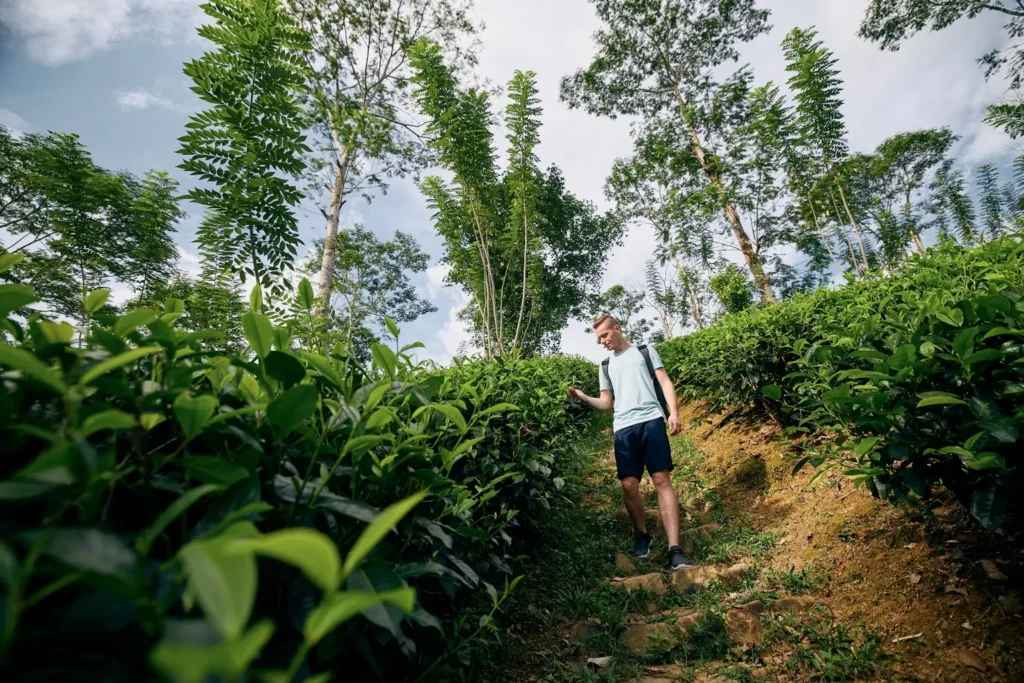
For more than a century, the best way to see Sri Lanka’s tea country was from a train window. Now you can walk through it. The Pekoe Trail Sri Lanka is the island’s first long-distance walking route: more than 300 kilometres of old estate tracks and footpaths that wind through tea plantations, cloud forest and hill villages between Kandy and Nuwara Eliya.
You do not need to walk all of it. The trail is divided into 22 stages, and most visitors choose one, two or three as day hikes. This guide explains how the trail works, which stages are worth your time, when to go and how to fit it into a wider holiday.
The Pekoe Trail at a glance
Length: just over 300 km in 22 stages. Start: the Ceylon Tea Museum at Hanthana, near Kandy. Finish: Pedro Estate, Nuwara Eliya. Stage length: about 9 to 21 km, usually three to seven hours of walking. Best months: January to April. Trail pass: required, and sold per stage. Opening hours: most stages are open from 6 am to 6 pm.
What Is the Pekoe Trail?
When the British planted tea across the central highlands in the nineteenth century, they built a network of paths and cart tracks to move leaf from the fields to the factories. The Pekoe Trail links these old routes into a single waymarked walk. It takes its name from “pekoe”, a grade of black tea.
The route begins on the edge of Kandy and travels south through Hatton and the Bogawantalawa valley, climbs to Horton Plains, drops to Haputale and Ella, and then loops north to finish in Nuwara Eliya. Along the way it passes working estates, tea factories, colonial bungalows, Hindu temples and villages that rarely saw visitors before the trail opened.
The trail is managed by a non-profit organisation, and the pass you buy for each stage helps to pay for maintenance, waymarking and hiker safety.
The Best Pekoe Trail Stages for a Day Hike
These are the stages we suggest most often, because they are scenic, easy to reach from popular hotels and manageable for a reasonably fit walker. Distances and grades are those published by the Pekoe Trail Organisation.
| Stage | Route | Distance | Grade | Why walk it |
|---|---|---|---|---|
| 1 | Hanthana to Galaha | 12.8 km | Easy | A gentle first taste, starting at the Ceylon Tea Museum near Kandy |
| 6 | Watagoda to Kotagala | 15.0 km | Easy | Classic estate scenery near Hatton, with tea factories and railway views |
| 8 | Norwood to Bogawantalawa | 15.9 km | Moderate | A wide valley of tea, lakes and old planters’ bungalows |
| 13 | Haputale to St Catherine’s | 14.6 km | Hard | Big views from the ridge around Lipton’s Seat |
| 15 | Makulella to Ella | 9.6 km | Moderate | A shorter walk through forest and tea into Ella |
| 16 | Ella to Demodara | 9.5 km | Easy | Passes the Nine Arch Bridge and ends at the Demodara railway loop |
If you only have time for one
Choose stage 16 if you are staying in Ella and want an easy half-day walk with famous sights. Choose stage 13 if you are a keen walker and want the most dramatic views. If you are staying in a tea bungalow near Hatton, stage 8 can often be started almost from your door.
The Full Route, Section by Section
- Stages 1 to 4, Kandy to Pundaluoya: the trail climbs out of Kandy through the Hanthana range and reaches Loolkandura, where James Taylor planted Sri Lanka’s first commercial tea in 1867.
- Stages 5 to 9, Hatton and Bogawantalawa: the heart of the tea country, with valley after valley of estates, reservoirs and workers’ villages.
- Stages 10 to 12, Horton Plains to Haputale: the highest and wildest part of the trail, crossing cloud forest and open grassland. A separate national park ticket may be needed here.
- Stages 13 to 16, Haputale to Demodara: the most popular section, with ridge-top views, Lipton’s Seat, Ella and the Nine Arch Bridge.
- Stages 17 to 22, Demodara to Nuwara Eliya: quieter and more remote, through the Uva hills and Udapussellawa to the finish at Pedro Estate.
Walking the whole trail usually takes between two and three weeks. Most walkers who attempt it break the journey with rest days in Hatton, Haputale and Ella.
Best Time to Walk the Pekoe Trail
January to April is the best time. The mornings are clear, paths are drier and the views are at their widest. This is also the high season for the south coast, so it is easy to finish a holiday on the beach.
From May to September the south-west monsoon brings rain to the western slopes around Hatton, although the eastern side of the hills, around Haputale and Ella, is often drier. October to December is the wettest period across the highlands, when paths can be slippery, leeches are common and stages are sometimes closed for safety.
Whatever the month, start early. Mist and showers tend to build from late morning, and the light is best just after sunrise.
Trail status, November 2026
According to the Pekoe Trail Organisation’s update of 6 November 2026, stage 2 is temporarily closed, stages 3, 4, 7, 9, 12, 18, 19 and 20 are on amber alert, and all other stages are open with a weather advisory because of the north-east monsoon. Conditions change quickly in the hills, so check Trail Watch on thepekoetrail.org, or ask us, before you set out.
Trail Passes, Hours and Guides
- Trail pass: every walker needs a pass for each stage. At the time of writing it costs around USD 10 per stage for foreign visitors. Passes can be booked through the official Pekoe Trail app and are also sold at the Ceylon Tea Museum.
- Other tickets: a few stages cross land managed by the wildlife or forest departments, such as Horton Plains, where a separate entry ticket applies.
- Opening hours: most stages are open from 6 am to 6 pm. Some have shorter hours where the path crosses wildlife corridors.
- Waymarking: the route is marked with posts and painted signs, and the official app and GPS tracks are useful where paths fork between tea fields.
- Guides: a local guide is not compulsory, but we recommend one. A good guide explains how tea is grown and made, introduces you to the people who live along the trail and takes care of timing and transport.
How Fit Do You Need to Be?
The easy stages suit anyone who is comfortable walking for three to four hours on uneven ground. The moderate and hard stages involve long climbs and descents, sometimes more than 800 metres in a day, at altitudes of 1,000 to 2,000 metres. There is little shade among the tea bushes, so the sun can be strong even when the air feels cool.
Because each stage starts and ends at a road, it is simple to walk a shorter section and have your driver meet you part of the way along.
What to Pack for the Pekoe Trail
- Walking shoes or boots with a good grip, already worn in.
- A light waterproof jacket and a warm layer for early starts.
- Sun protection: a hat, sunglasses and sunscreen.
- At least two litres of water and some snacks, as shops are rare on many stages.
- Leech socks or insect repellent in the wetter months.
- A charged phone with the trail app and offline maps downloaded.
- Small change for tea and short eats at village shops along the way.
Where to Stay Along the Trail
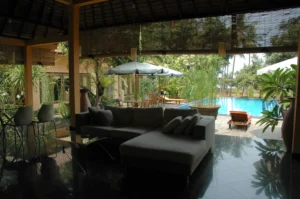
One of the pleasures of the Pekoe Trail is where you sleep. Around Hatton and Bogawantalawa, restored planters’ bungalows offer butler service, open fires and gardens looking over the tea. Haputale and Ella have small boutique hotels and lodges with views across the southern plains, while Nuwara Eliya is known for its grand colonial-era hotels. Kandy makes a comfortable base for the first stage.
With a car and driver, you can stay two or three nights in one place and walk different stages each day without carrying more than a day pack.
Hill country train update
As of mid-November 2026, trains are running between Nanu Oya and Badulla, which includes Haputale, Ella and Demodara. Services on the Main Line between Gampola and Nanu Oya are suspended, and Sri Lanka Railways is aiming to resume trains to Kandy later in November, although this has not been confirmed. Check the latest status before you travel.
How to Add the Pekoe Trail to Your Sri Lanka Holiday
A simple way to include the trail in a two-week trip is to walk three stages in three different landscapes:
- Kandy, 2 nights: visit the Temple of the Sacred Tooth Relic, then walk stage 1 from the Ceylon Tea Museum.
- Hatton or Bogawantalawa, 2 to 3 nights: stay in a tea bungalow, tour a factory and walk stage 6 or stage 8.
- Haputale or Ella, 2 to 3 nights: walk stage 13 for Lipton’s Seat, or stage 16 for the Nine Arch Bridge, and ride the train between the two towns.
- Yala and the south coast: finish with a safari and a few days on the beach.
Walk the Pekoe Trail With Wander Ceylon
As a Colombo-based tailor-made tour operator, Wander Ceylon can build the Pekoe Trail into a private journey that suits your pace. We choose the right stages for your fitness and interests, arrange trail passes and an experienced local guide, book characterful places to stay and have your chauffeur waiting at the end of each walk.
Would you like to walk through Sri Lanka’s tea country? Contact our team and we will plan a private itinerary around the stages that suit you best.
Frequently Asked Questions
How long is the Pekoe Trail in Sri Lanka?
The Pekoe Trail is just over 300 kilometres long and is divided into 22 stages. It runs from Hanthana, near Kandy, to Pedro Estate in Nuwara Eliya.
How many days does it take to walk the Pekoe Trail?
Walking the whole trail usually takes two to three weeks. Most visitors walk between one and three stages as day hikes, each taking around three to seven hours.
Which is the best stage of the Pekoe Trail?
For an easy walk, stage 16 from Ella to Demodara passes the Nine Arch Bridge. For the best views, stage 13 from Haputale takes in the ridge around Lipton’s Seat. Stage 8 near Bogawantalawa is a favourite for classic tea scenery.
Do you need a permit for the Pekoe Trail?
Yes. Walkers need a trail pass for each stage, which can be booked through the official Pekoe Trail app. A few stages also need a separate ticket, for example where the trail crosses Horton Plains National Park.
When is the best time to walk the Pekoe Trail?
January to April is the best time, with the driest paths and clearest views. October to December is the wettest period, when some stages may be closed for safety.
Can beginners walk the Pekoe Trail?
Yes. Several stages are graded easy, including stage 1, stage 6 and stage 16, and any stage can be shortened by arranging for a driver to meet you along the route.